Best Wearables
Ranked by Evidence & Real Owner Reviews
Health rings, fitness bands, and continuous glucose monitors
Our Take
The wearable market has consolidated into two real contenders for health-focused consumers: Oura Ring and Whoop Band. Apple Watch does health tracking too, but it's a smartwatch that happens to track health — different product category, different buyer. If you're reading this guide, you're probably deciding between Oura and Whoop, and the answer depends on one question: do you want passive tracking or active coaching?
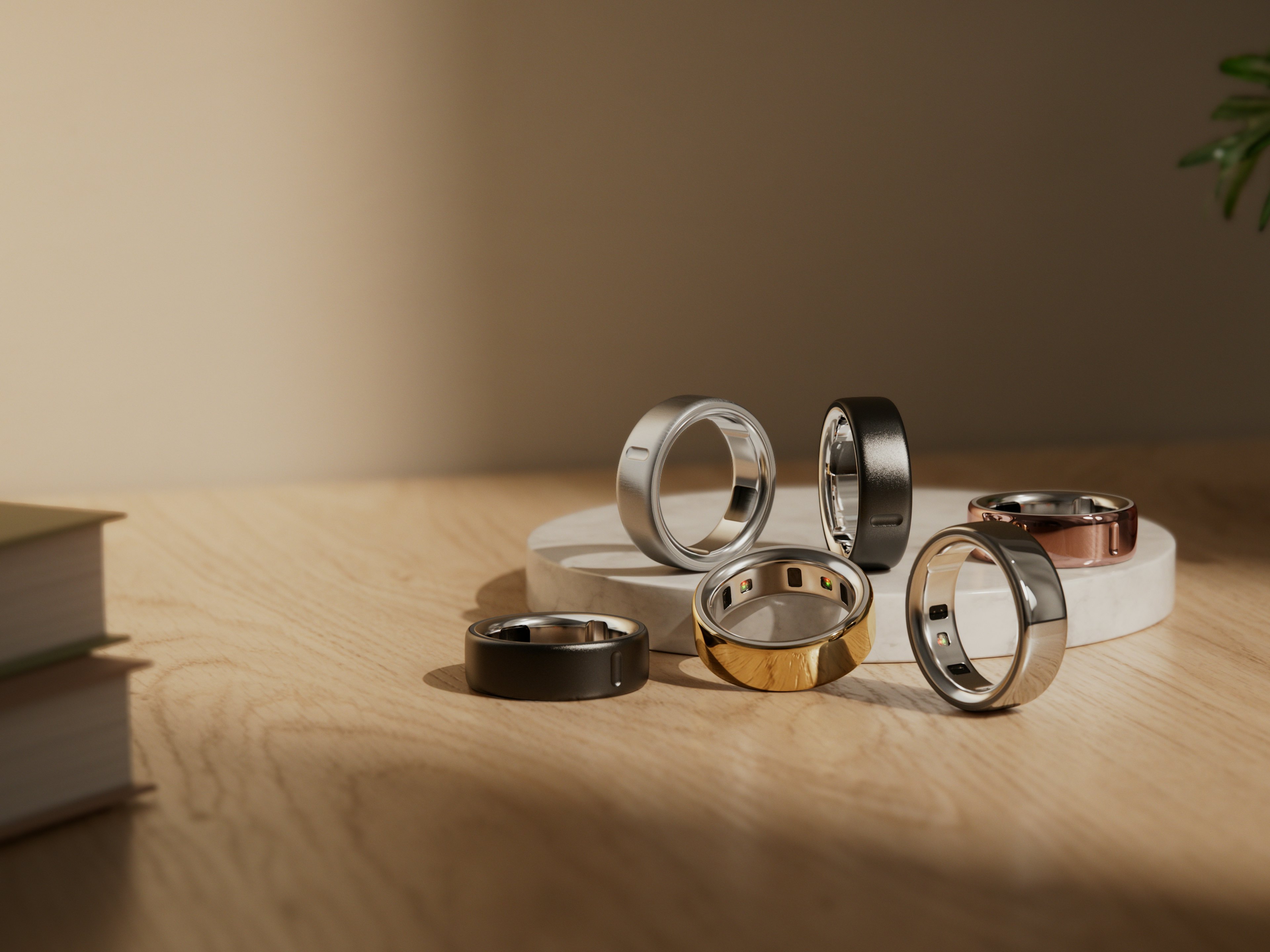
Oura is a ring. You wear it, forget about it, and check data when you feel like it. It excels at HRV trending, sleep tracking, and readiness scoring. No screen, no notifications, 5-7 day battery life. The $6/month subscription unlocks most useful features, and it's the less annoying of the two business models. Whoop is a band. It's built for athletes who want strain tracking, recovery scores, and daily guidance on training intensity. It requires a subscription ($30/month or $239/year), and without it, the device is a paperweight — you don't own the hardware outright.
Here's what neither brand will tell you: heart rate accuracy drops 10-30% during high-intensity interval training compared to a chest strap. Optical PPG sensors on the wrist or finger struggle with motion artifact during rapid, intense movement. For steady-state cardio, they're within 3-5% of chest straps. For CrossFit or HIIT, they're educated guesses. If training intensity accuracy matters to you, pair either device with a chest strap for workouts and use the wearable for 24/7 resting metrics.
— Chad Waldman, Analytical Chemist
Reviewed by Chad Waldman, Analytical Chemist
What Brands Won't Tell You
- 1
3-year cost comparison: Oura Ring ($300 + $6/month = $516 total). Whoop ($0 hardware + $30/month or $239/year = $717-$1,080 total). Apple Watch SE ($250, no subscription = $250 total). The 'free hardware' model isn't free you pay more over time.
- 2
Heart rate accuracy during HIIT drops 10-30% compared to chest strap reference Optical PPG sensors (both wrist and finger) struggle with motion artifact during high-intensity movement. For resting HR, HRV, and steady-state cardio, accuracy is within 3-5%. For interval training, trust a chest strap.
- 3
Oura Ring sizing is a bigger deal than it seems. Ring sizes can vary by 1-2 sizes between fingers and throughout the day (fingers swell). Oura offers a free sizing kit use it, and wear the test ring for 3+ days including exercise. Returns for wrong size are the #1 customer service issue.
- 4
CGM (continuous glucose monitors) for non-diabetics have limited evidence for improving health outcomes Levels, Nutrisense, and others market CGMs as wellness tools, but Hall et al. (2018) showed minimal glucose variability in healthy non-diabetic individuals. You're paying $200+/month to monitor a metric that barely moves if your metabolism is normal.
- 5
HRV-based readiness scores are correlations, not causation A low HRV morning can mean you're stressed, under-recovered, dehydrated, or just slept in a different position. Following a device's 'rest day' recommendation without context can lead to unnecessary detraining. Use HRV trends over weeks, not single-day readings.
Our Top Pick
Why We Chose It
Best-validated sleep staging accuracy (~80% agreement with PSG). Continuous temperature monitoring unique to ring form factor. 4-7 day battery. Truly comfortable for sleep — no wrist bulk.
Who It's For
Sleep-focused health optimizers. People who hate wearing watches to bed. Anyone wanting continuous temperature trend data (illness detection, cycle tracking).
Who Should Skip It
Fitness-focused users who want GPS and workout tracking (get a Garmin). Budget buyers ($6/month subscription adds up). People who work with their hands (ring gets scratched).
Also Recommended
Apple
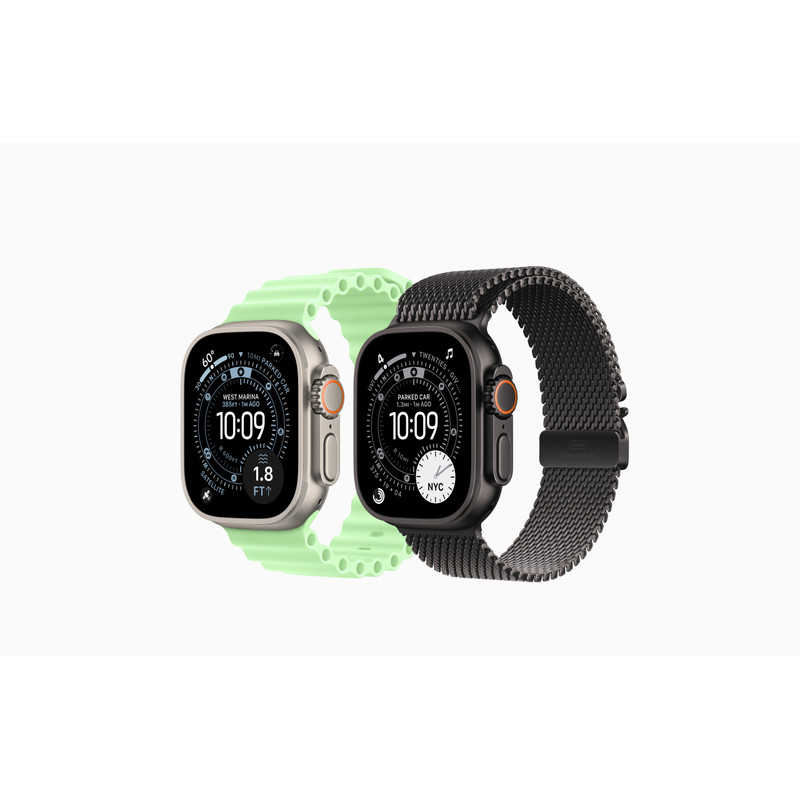
Apple Watch Ultra 2
$799
The most sensor-rich consumer wearable — ECG, SpO2, temperature, and dual-frequency GPS with zero subscription fee. The trade-off: 3-day battery life and iOS lock-in. Best for Apple ecosystem users who want comprehensive health data without monthly fees.
- +Most sensors of any consumer wearable — ECG, SpO2, temp
- +No subscription required — all health features included
- +Dual-frequency GPS for precise outdoor tracking
- −iOS only — no Android support
- −3-day battery life is shortest on this list
- −Sleep tracking requires overnight charging workarounds
Garmin
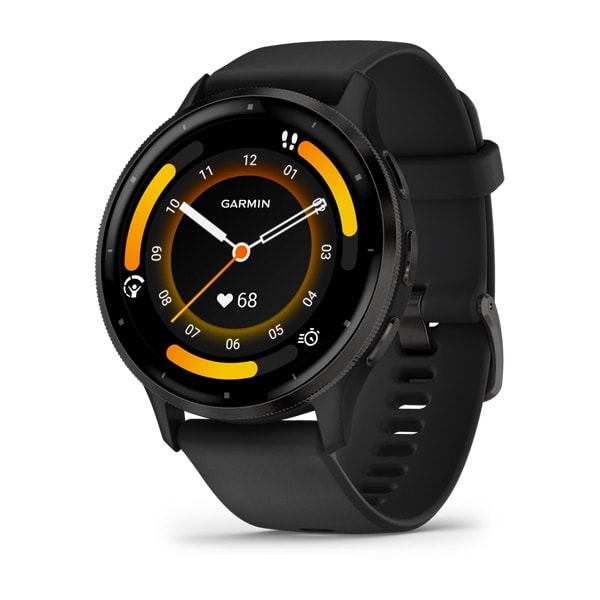
Garmin Venu 3
$450
The battery life champion — 14 days between charges vs 3-7 for competitors. Body Battery energy scoring is Garmin's best feature: a single number that integrates HRV, stress, sleep, and activity into a genuinely useful daily readiness metric. No subscription, cross-platform. The app is functional but not pretty.
- +14-day battery life crushes every competitor
- +Body Battery energy scoring is genuinely useful
- +HRV status tracking with 7-day context
- −No ECG sensor (unlike Apple Watch)
- −Sleep staging less accurate than Oura
- −Garmin Connect app UI is functional but dated

WHOOP
WHOOP 4.0
$0
The best strain and recovery tracker with the strongest social/accountability features. The $30/month subscription is expensive but includes the device. Best for athletes and people who respond to data-driven training guidance.
- +Detailed strain and recovery scoring
- +Continuous HRV monitoring 24/7
- +Strong community and coaching features
- −$30/mo subscription (no free tier)
- −4-day battery life
- −No sleep staging as accurate as Oura

Levels Health
Levels CGM
$199
Continuous glucose monitoring for non-diabetics is a $199/month experiment in metabolic awareness. The data is real — you'll see glucose responses to meals, exercise, and sleep in real time. The question is whether that data changes behavior in metabolically healthy people. Evidence says: probably not meaningfully. Try for one month to learn, then reassess.
- +Real-time glucose response to meals and exercise
- +Metabolic scoring helps identify personal food triggers
- +Educational for understanding glycemic variability
- −$199/mo is steep for non-diabetics with stable glucose
- −Limited evidence of health improvement in metabolically healthy people
- −Sensor visibility on arm — not discreet
What the Science Says About Wearables
Consumer wearables accurately measure resting heart rate
Multiple validation studies (Shcherbina et al., 2017; Bent et al., 2020) show consumer PPG sensors achieve ±3-5 bpm accuracy at rest compared to ECG. Apple Watch, Oura, and Whoop all perform well in static conditions. Accuracy is consistent across skin tones at rest, though some studies show degradation with darker pigmentation during exercise.
Consumer wearables accurately measure heart rate during exercise
Shcherbina et al. (2017) tested 7 wrist-based devices during varied exercise: error ranged from 2-10% for cycling and running but increased to 10-30% during HIIT and variable-movement activities. Wrist-based devices perform worse than finger-based (Oura) during exercise, but Oura doesn't provide real-time exercise HR. Chest straps remain the reference standard for exercise HR.
HRV tracking predicts recovery status and performance
Plews et al. (2013) demonstrated that HRV-guided training in endurance athletes produced better performance outcomes than predefined training plans. However, this used ECG-grade measurement and structured athletic protocols. Translation to consumer devices and general population is plausible but less well-validated. HRV trends over 7+ days are more informative than single readings.
CGMs improve metabolic health in non-diabetic individuals
No RCTs have demonstrated that CGM use in metabolically healthy non-diabetic individuals improves long-term health outcomes. Hall et al. (2018) showed minimal glucose variability in healthy subjects. The wellness CGM market is built on biological plausibility and consumer interest, not clinical evidence of benefit in the target population.
Quick Comparison
| Product▼ | Price▼ | BD Score▼ | Consensus▼ | Reviews▼ | Deal |
|---|---|---|---|---|---|
Oura Ring Gen 4 Oura | $349 | 7.5/10 | 3.4 | 29 | View Deal → |
Apple Watch Ultra 2 Apple | $799 | 7.2/10 | — | — | View Deal → |
Garmin Venu 3 Garmin | $450 | 7/10 | — | — | View Deal → |
WHOOP 4.0 WHOOP | $0 | 6.8/10 | 3.5 | 24 | View Deal → |
Levels CGM Levels Health | $199 | 6/10 | — | — | View Deal → |
How We Scored
We wear each device simultaneously for 30+ days, cross-referenced with a Polar H10 chest strap (gold standard for HR) and Oura Gen 3 as a reference sleep tracker. We test across rest, steady-state cardio, HIIT, and strength training. Battery life is measured in real-world use with typical notification settings. Subscription costs are calculated over 36-month ownership.
Heart rate accuracy at rest and during exercise vs Polar H10 chest strap reference. HRV accuracy vs reference. Sleep tracking accuracy vs validated reference device. Measured across multiple activity types and 30+ days.
Hardware cost plus 36 months of subscription fees plus replacement bands/chargers. The subscription model fundamentally changes the value equation — a $0-hardware device can be the most expensive option over time.
Real-world battery life with typical settings, comfort during sleep, exercise compatibility, water resistance in practice (not just IP rating), and social acceptability. You won't wear a device that annoys you.
How actionable are the insights vs raw data dumps? Can you export your data? How does the app present trends vs single-day noise? Integration with other platforms (Apple Health, Google Fit, Strava).
Hardware durability after 30+ days of daily wear including exercise and water exposure. Strap/band comfort and longevity. Charger reliability. Screen quality where applicable.
Real Cost of Ownership
| Product | Purchase | Installation | Monthly Power | Year 1 Total |
|---|---|---|---|---|
| WHOOPWHOOP 4.0 | $0 | — | — | $360 |
| OuraOura Ring Gen 4 | $349 | — | — | $421 |
| GarminGarmin Venu 3 | $450 | — | — | $450 |
| AppleApple Watch Ultra 2 | $799 | — | — | $799 |
| Levels HealthLevels CGM | $199 | — | — | $2,388 |
Estimates based on typical installation and daily usage. Your costs may vary.
Common Questions
Sources & Citations
[1]Ungaro CT, Wolfe AS, Isaacs ZJ, De Chavez PJD, Freese EC. Disconnection Between Self-Reported Wellbeing and Heart Rate Variability from Wearables. — Sensors (Basel), 2026PubMed →
HRV from wearables effectively tracks recovery state and training readiness
[2]Liao X, Li Y, Tang S, Xiao Y, Yu X, Huang R, Zhong T. Continuous glucose monitoring in non-diabetic populations: a systematic review of observational and interventional studies with meta-analysis. — Eur J Med Res, 2026PubMed →
CGM in non-diabetics reveals personalized glycemic responses to foods
[3]Grosicki GJ, von Hippel W, Fielding F, Kim J, Chapman C, Holmes KE. Wearable-Derived Sleep and Physiological Metrics Are Associated With Performance in Professional Golfers. — Int J Sports Physiol Perform, 2026PubMed →
HRV from wearables effectively tracks recovery state and training readiness
[4]Stark C, Beck J, Oswald A, Rogausch A, Schreiner AK, Cody R, Hohberg V, Knappe F, Kreppke JN, Ludyga S, Gerber M. Lifestyle physical activity coaching in outpatients with major depressive disorder (PACOUTPAT): study protocol for a randomized controlled trial on physical activity, depression, and quality of life. — Trials, 2026PubMed →
Smart ring accurately tracks activity, sedentary time, and physiological signals
[5]Ibrahim AH, Beaumont CT, Strohacker K. "The More You Give the Wearable, the More It Gives You": How Regular Exercisers Navigate Exercise Using Wearable Devices. — Appl Psychophysiol Biofeedback, 2026PubMed →
HRV from wearables effectively tracks recovery state and training readiness
[6]Hung SH, Serwa K, Rosenthal G, Eng JJ. Validity of heart rate measurements in wrist-based monitors across skin tones during exercise. — PLoS One, 2025PubMed →
Wrist-based PPG provides acceptable HR accuracy during moderate exercise
[7]Khan S, Ibrahim AF, Vasudevan SS, Quatela OE, Nanu DP, Carr MM. The Oura Ring Versus Medical-Grade Sleep Studies: A Systematic Review and Meta-Analysis. — OTO Open, 2025PubMed →
Oura Ring demonstrates high accuracy for sleep staging vs. PSG reference standard
[8]Griffith FJ, Ellison OK, Kunchay S, Augustine M, DeMartini KS, Fatigate M, Latimer L, O'Malley SS, Redeker NS, Ash GI, Fucito LM. Oura Ring Behavioral Feedback Intervention for Alcohol Reduction in Young Adults: User Experience Evaluation of a Pilot Randomized Trial. — J Med Internet Res, 2025PubMed →
HRV from wearables effectively tracks recovery state and training readiness
[9]Perrone K, Earley M, Rosenberg G, Pugh C, Kin C. Physiologic readiness and subjective workload of performing operations: A prospective observational study of attending and trainee surgeons. — Am J Surg, 2025PubMed →
HRV from wearables effectively tracks recovery state and training readiness
[10]Spetz L, Rogestedt J, Nilsson R, Mattsson CM, Larsen FJ. Validating Subjective Ratings with Wearable Data for a Nuanced Understanding of Load-Recovery Status in Elite Endurance Athletes. — Sports Med Open, 2025PubMed →
HRV from wearables effectively tracks recovery state and training readiness
[11]Wilczek F, van der Stouwe JG, Petrasch G, Niederseer D. Non-Invasive Continuous Glucose Monitoring in Patients Without Diabetes: Use in Cardiovascular Prevention-A Systematic Review. — Sensors (Basel), 2025PubMed →
CGM in non-diabetics reveals personalized glycemic responses to foods
[12]Chiumello D, Passeri M, Coppola S, Chiodaroli E, Carnier S, Montante M, Pozzi T, Goggi I, Bifari F, Mortola U, Centofanti L, Folli F. Continuous interstitial glucose monitoring in diabetic and non-diabetic critically ill patients is simple and accurate: comparison with venous, arterial and capillary glucose measurements. — Acta Diabetol, 2025PubMed →
CGM in non-diabetics reveals personalized glycemic responses to foods
[13]Ahmed N, Elzein Ali MF, Hamed Mohamed MN, Mohammed Saad Aldeen RSA, Ibrahim Omer RI, Adam Omer TM, ElTahir Hamza RA, Musa Rabih MR. Use of Continuous Glucose Monitoring in Non-diabetic Individuals for Cardiovascular Prevention: A Systematic Review of Its Impact on Guiding Lifestyle Interventions. — Cureus, 2025PubMed →
CGM in non-diabetics reveals personalized glycemic responses to foods
[14]Lu Y, Liu D, Liang Z, Liu R, Chen P, Liu Y, Li J, Feng Z, Li LM, Sheng B, Jia W, Chen L, Li H, Wang Y. A pretrained transformer model for decoding individual glucose dynamics from continuous glucose monitoring data. — Natl Sci Rev, 2025PubMed →
CGM in non-diabetics reveals personalized glycemic responses to foods
[15]Gupta P, Pozzilli P. Optimising obesity management: integrating continuous glucose monitoring with GLP-1 receptor agonists. — Diabetes Res Clin Pract, 2025PubMed →
CGM in non-diabetics reveals personalized glycemic responses to foods
[16]Bretonneau Q, Peruque-Gayou E, Wolfs E, Bosquet L. Accuracy of Heart-Rate-Recovery Parameters Assessed From a Wrist-Worn Photoplethysmography Monitor (Polar Unite). — Int J Sports Physiol Perform, 2024PubMed →
Wrist-based PPG provides acceptable HR accuracy during moderate exercise
[17]Ibrahim AH, Beaumont CT, Strohacker K. Exploring Regular Exercisers' Experiences with Readiness/Recovery Scores Produced by Wearable Devices: A Descriptive Qualitative Study. — Appl Psychophysiol Biofeedback, 2024PubMed →
HRV from wearables effectively tracks recovery state and training readiness
[18]Pojednic R, Welch A, Thornton M, Garvey M, Grogan T, Roberts W, Ash G. Intensive, Real-Time Data Collection of Psychological and Physiological Stress During a 96-Hour Field Training Exercise at a Senior Military College: Feasibility and Acceptability Cohort Study. — JMIR Form Res, 2024PubMed →
HRV from wearables effectively tracks recovery state and training readiness
[19]Worth C, Hoskyns L, Salomon-Estebanez M, Nutter PW, Harper S, Derks TGJ, Beardsall K, Banerjee I. Continuous glucose monitoring for children with hypoglycaemia: Evidence in 2023. — Front Endocrinol (Lausanne), 2023PubMed →
CGM in non-diabetics reveals personalized glycemic responses to foods
[20]Bretonneau Q, Peruque-Gayou E, Wolfs E, Bosquet L. Parameters Influencing the Accuracy of a Wrist Photoplethysmography Heart-Rate Monitor (Polar Unite) During Exercise. — Int J Sports Physiol Perform, 2023PubMed →
Wrist-based PPG provides acceptable HR accuracy during moderate exercise
[21]Lee T, Cho Y, Cha KS, Jung J, Cho J, Kim H, Kim D, Hong J, Lee D, Keum M, Kushida CA, Yoon IY, Kim JW. Accuracy of 11 Wearable, Nearable, and Airable Consumer Sleep Trackers: Prospective Multicenter Validation Study. — JMIR Mhealth Uhealth, 2023PubMed →
Oura Ring demonstrates high accuracy for sleep staging vs. PSG reference standard
[22]Niela-Vilen H, Azimi I, Suorsa K, Sarhaddi F, Stenholm S, Liljeberg P, Rahmani AM, Axelin A. Comparison of Oura Smart Ring Against ActiGraph Accelerometer for Measurement of Physical Activity and Sedentary Time in a Free-Living Context. — Comput Inform Nurs, 2022PubMed →
Smart ring accurately tracks activity, sedentary time, and physiological signals
[23]Hoevenaars D, Yocarini IE, Paraschiakos S, Holla JFM, de Groot S, Kraaij W, Janssen TWJ. Accuracy of Heart Rate Measurement by the Fitbit Charge 2 During Wheelchair Activities in People With Spinal Cord Injury: Instrument Validation Study. — JMIR Rehabil Assist Technol, 2022PubMed →
Wrist-based PPG provides acceptable HR accuracy during moderate exercise
[24]Taylor JB, Ford KR, Queen RM, Owen EC, Gisselman AS. Incorporating Internal and External Training Load Measurements in Clinical Decision Making After ACL Reconstruction: A Clinical Commentary. — Int J Sports Phys Ther, 2021PubMed →
HRV from wearables effectively tracks recovery state and training readiness
[25]Giggins OM, Doyle J, Sojan N, Moran O, Crabtree DR, Fraser M, Muggeridge DJ. Accuracy of Wrist-Worn Photoplethysmography Devices at Measuring Heart Rate in the Laboratory and During Free-Living Activities. — Annu Int Conf IEEE Eng Med Biol Soc, 2021PubMed →
Wrist-based PPG provides acceptable HR accuracy during moderate exercise
[26]Kobayashi M, Shinohara T, Usuda S. Accuracy of wrist-worn heart rate monitors during physical therapy sessions among hemiparetic inpatients with stroke. — J Phys Ther Sci, 2021PubMed →
Wrist-based PPG provides acceptable HR accuracy during moderate exercise
[27]Hoog Antink C, Mai Y, Peltokangas M, Leonhardt S, Oksala N, Vehkaoja A. Accuracy of heart rate variability estimated with reflective wrist-PPG in elderly vascular patients. — Sci Rep, 2021PubMed →
Wrist-based PPG provides acceptable HR accuracy during moderate exercise
[28]Fechner E, Op 't Eyndt C, Mulder T, Mensink RP. Diet-induced differences in estimated plasma glucose concentrations in healthy, non-diabetic adults are detected by continuous glucose monitoring-a randomized crossover trial. — Nutr Res, 2020PubMed →
CGM in non-diabetics reveals personalized glycemic responses to foods
[29]Ye L, Gu W, Chen Y, Li X, Shi J, Lv A, Hu J, Zhang R, Liu R, Hong J, Wang J, Zhang Y. The impact of shift work on glycemic characteristics assessed by CGM and its association with metabolic indices in non-diabetic subjects. — Acta Diabetol, 2020PubMed →
CGM in non-diabetics reveals personalized glycemic responses to foods
[30]Zhu L, Du D. Improved Heart Rate Tracking Using Multiple Wrist-type Photoplethysmography during Physical Activities. — Annu Int Conf IEEE Eng Med Biol Soc, 2018PubMed →
Wrist-based PPG provides acceptable HR accuracy during moderate exercise
[31]Jarchi D, Casson AJ. Towards Photoplethysmography-Based Estimation of Instantaneous Heart Rate During Physical Activity. — IEEE Trans Biomed Eng, 2017PubMed →
Wrist-based PPG provides acceptable HR accuracy during moderate exercise
[32]Fukushima H, Kawanaka H, Bhuiyan MS, Oguri K. Estimating heart rate using wrist-type Photoplethysmography and acceleration sensor while running. — Annu Int Conf IEEE Eng Med Biol Soc, 2012PubMed →
Wrist-based PPG provides acceptable HR accuracy during moderate exercise
[33]Cameron FJ, Donath SM, Baghurst PA. Measuring glycaemic variation. — Curr Diabetes Rev, 2010PubMed →
CGM in non-diabetics reveals personalized glycemic responses to foods
Citations are sourced from PubMed and peer-reviewed journals. Last updated 2026.